.svg)
9 January 2026
Jack Grogan-Fenn
9 January 2026
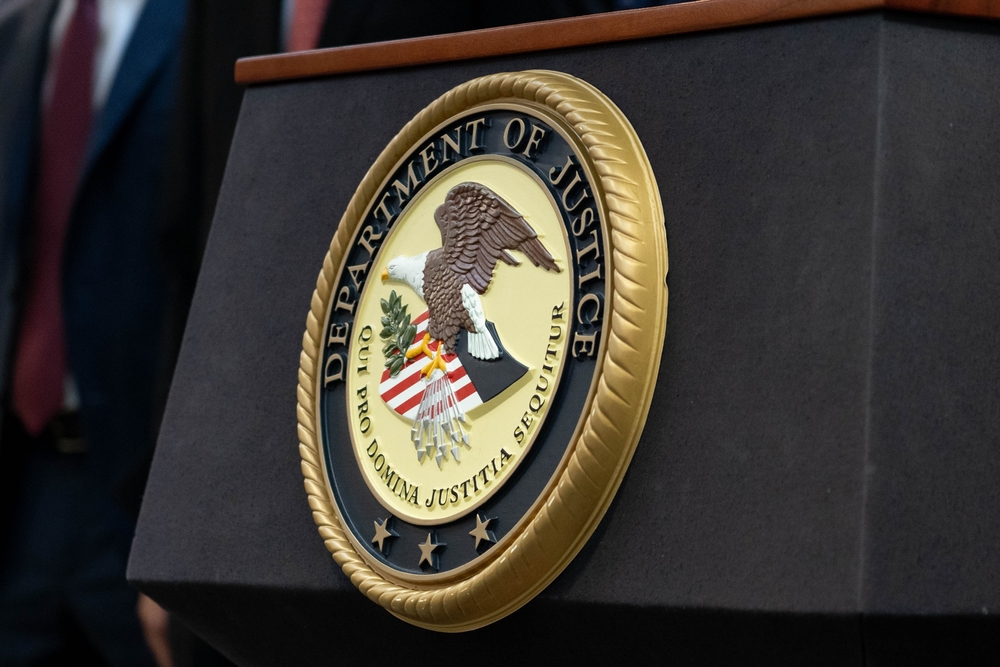
The US Department of Justice (DOJ) has launched a fresh attack on diversity, equity and inclusion (DEI), planning to apply fraud law as a further disincentive to companies applying such policies.
The department is set to argue that considering diversity when hiring while having a federal contract is effectively fraud against the government, according to reports. This would potentially enable the government to repossess millions of dollars. Alphabet’s Google and Verizon Communications are reportedly among a list of companies that have received demands for documents and information about their workplace programmes from the DOJ. Other companies in the automotive, defence and utilities and pharmaceutical sectors are said to be among those being examined.
Key Client Takeaways:
DOJ Reframes DEI as Fraud
Companies Split on DEI Decisions
Cross-government Anti-DEI Push Continues
The federal probes into DEI are proceeding under the umbrella of the False Claims Act which has historically been used to pursue contractors who bill the government for work that was never performed or inflate the cost of services rendered. The DOJ has altered the interpretation of the act to claim that companies with federal contracts are failing to fulfil their obligations to the government if they still have DEI programmes. This diverges from false-claims investigations, which tend to commence when whistleblower or an internal government watchdog tips off the DOJ to alleged fraud. Should the DOJ emerge victorious in a civil false-claims lawsuit, defendants could be subject to three times the damages the government alleges to have suffered.
Under the administration of US President Donald Trump, policymakers and politicians have increasingly targeted DEI and portrayed it as a bogeyman responsible for a litany of perceived problems. This included an enforcement memo from Deputy Attorney General Todd Blanche in May for a new initiative that told the DOJ “to investigate and, as appropriate, pursue claims against any recipient of federal funds” for those with preferences which created benefits or burdens based on race, ethnicity, or national origin.
Last month, Trump signed an executive order instructing the US Securities and Exchange Commission (SEC) to “review all rules, regulations, guidance, bulletins, and memoranda relating to proxy advisors” and the Federal Trade Commission to “review ongoing State antitrust investigations”. As reported by Minerva Analytics, the order alleged that two “foreign-owned” proxy advisors “regularly” use their substantial power to advance and prioritise “radical politically-motivated agendas” such as environmental, social and governance (ESG) and DEI.
In November, the US State Department also reportedly launched new rules to all US embassies and consulates involved in compiling its annual report on global human rights abuses stipulating that countries enforcing race or gender DEI policies could be deemed as infringing on human rights.
Trump’s high-profile campaign against DEI has had a chilling effect for some companies. In May, Rolls Royce abandoned its LGBTQ+ and other diversity programmes after coming under pressure from the US government to drop its DEI initiatives, as reported by Minerva Analytics. Major companies such as Amazon, Disney, and Meta have abandoned DEI policies in response to Trump’s actions. Google has also rowed back on some elements of DEI but evidently not to a extent satisfactory to the Trump regime. This pressure has also spilled beyond the US’ borders with more than half of UK businesses altering their approach to DEI in response to Trump’s war on the concept, according to reports.
Other companies have stood strong on ESG, however, with wholesale giant Costco prominently continuing to demonstrate strong ESG and leadership and defend its DEI policies despite heightened political backlash. Last January, 19 attorney generals of Republican states sent a letter to the CEO of Costco accusing the company of reinforcing policies they claim violate merit-based principles and federal law. It also demanded that the company inform the states within 30 days whether it intended to revoke its DEI policies or provide a justification for maintaining them, as reported by Minerva Analytics.
Costco also last month opted to accept a shareholder proposal from noted anti-ESG shareholder proponent National Center for Public Policy Research in spite of the SEC announcing that it will not respond to company no action requests to exclude shareholder proposals during the 2026 proxy season. As reported by Minerva Analytics, this decision is expected to most acutely impact ESG- and DEI-related shareholder proposals, though anti-ESG and anti-DEI resolutions may well also be effected. Costco’s AGM will take place on 15 January.
You can read more of our articles by clicking here.


.jpg)

-1.avif)