18 November 2026
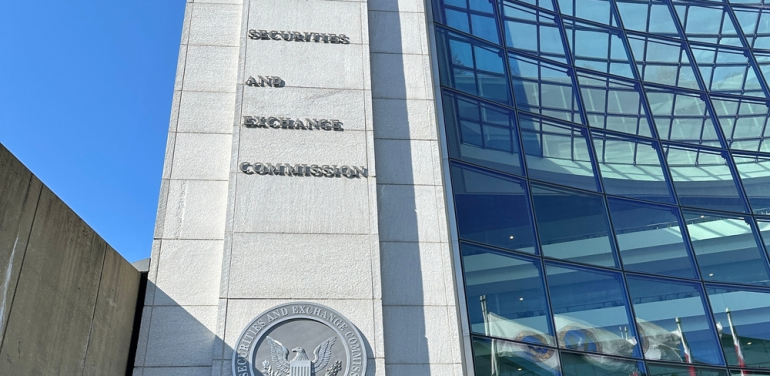
Minerva Analytics has urged the US Securities and Exchange Commission (SEC) to preserve shareholders' ability to submit proposals through company proxy materials as the regulator considers the future of Rule 14a-8. Minerva argues that investors should retain a federal right to place issues before fellow shareholders regardless of subject matter, with voting outcomes rather than regulatory intervention determining their success.
Minerva contends that the debate has been wrongly framed as a choice between retaining the current regime and abolishing it altogether. Instead, the firm's submission proposes a content-neutral framework that preserves shareholder access while reducing the SEC's involvement in disputes over proposal subject matter.
Minerva's proposed alternative combines a federal right for eligible shareholders to submit proposals regardless of topic with an independent panel to adjudicate procedural disputes. The firm argues that such a framework would maintain investor participation in corporate governance while addressing concerns about regulators determining which issues shareholders should be permitted to raise.
• Minerva Analytics argues that shareholder access to company proxy materials should be preserved even if the SEC stops assessing proposal content.
• The firm proposes a content-neutral federal right to submit shareholder proposals, backed by an independent panel to oversee procedural disputes.
• Minerva warns that rescinding Rule 14a-8 without a replacement framework could fragment shareholder rights across different US state jurisdictions.
A central argument in Minerva's submission is that Rule 14a-8 performs two distinct functions. First, it determines which shareholder proposals companies must include in their proxy materials. Second, it provides shareholders with a practical mechanism for communicating proposals to other investors through the proxy process.
According to the firm, criticism of the SEC's role in assessing proposal content does not necessarily justify eliminating the access mechanism itself. Minerva argues that regulators can step back from deciding whether proposals are political, social or otherwise controversial while preserving shareholders' ability to bring issues before their fellow investors.
That position reflects arguments recently advanced by Minerva’s CEO Sarah Wilson in an article for the Harvard Law School Forum on Corporate Governance. Wilson argued that regulators could reduce their involvement in content-based disputes without removing the practical means by which shareholders place proposals before other investors.
One of the more notable aspects of the Rule 14a-8 debate is the breadth of opposition to a complete repeal of the framework. Minerva notes that support for preserving shareholder access extends beyond traditional shareholder-rights groups and ESG investors.
The National Legal and Policy Center (NLPC), a frequent critic of ESG investing, has sought company-level commitments to preserve existing ownership and holding-period requirements for submitting proposals. Its resolution at Procter & Gamble received more than 26% support at the company's annual general meeting in October, although it did not pass. A similar NLPC proposal is scheduled for a vote at Oracle's AGM on 18 November.
NLPC also secured an agreement with Microsoft to maintain its existing shareholder proposal eligibility thresholds for one year, covering the next proxy cycle, despite potential changes to federal rules. The organisation subsequently withdrew its proposal.
Separately, the Interfaith Center on Corporate Responsibility announced earlier this month that nearly 100 institutional investors representing U$2.3 trillion in assets under management had signed an open letter urging companies to oppose the SEC's proposed rescission of Rule 14a-8. The letter also called on companies to adopt policies allowing shareholders to continue filing proposals if the rule is withdrawn.
For Minerva, these developments demonstrate a broader consensus around shareholder access itself. Investors and advocacy groups may disagree sharply on the substance of individual proposals while still supporting the principle that shareholders should have a route to present proposals to other investors.
Minerva argues that one of the principal risks of eliminating Rule 14a-8 without a replacement mechanism is the fragmentation of shareholder rights across state jurisdictions. The firm warns that different ownership thresholds, filing requirements and procedural rules could emerge, creating a less consistent framework for both issuers and investors.
Recent developments in Delaware illustrate that possibility. Proposals for a replacement framework would preserve a route for shareholder resolutions but introduce substantially higher ownership thresholds and limits on the number of proposals eligible for inclusion. Minerva has argued that such approaches could make participation increasingly dependent on investor size and coalition-building capacity.
The firm also warns that rescission may not reduce disputes as intended. Instead, disagreements over proposal eligibility could shift into state courts, creating a more complex patchwork of legal requirements and potentially increasing uncertainty for companies and investors.
Rather than defending the status quo, Minerva advocates a reform agenda centred on a content-neutral federal right allowing eligible shareholders to submit proposals irrespective of subject matter. Under this approach, questions about a proposal's political, social or governance content would be left to shareholders to determine through the voting process.
To oversee procedural disputes, the firm proposes creating an independent shareholder proposal panel modelled in part on the UK's Takeover Panel. The body would focus on issues such as ownership requirements, filing deadlines, duplication and resubmission rules rather than judging the merits of particular proposals.
Minerva argues that such a body could also improve procedural certainty through faster decisions, published precedents and a clearly defined appeals process.
The comment preiod on the SEC's proposed Rule 14a-8 rescission closes on 20 November, after which the regulator will review submissions before deciding whether and how to proceed.
The debate has increasingly moved beyond the question of whether Rule 14a-8 should survive in its current form. Instead, the emerging issue is whether policymakers can preserve a practical route for shareholder participation while reducing regulatory involvement in disputes over proposal content. Minerva's submission argues that those objectives need not be mutually exclusive.