.svg)
1 October 2026
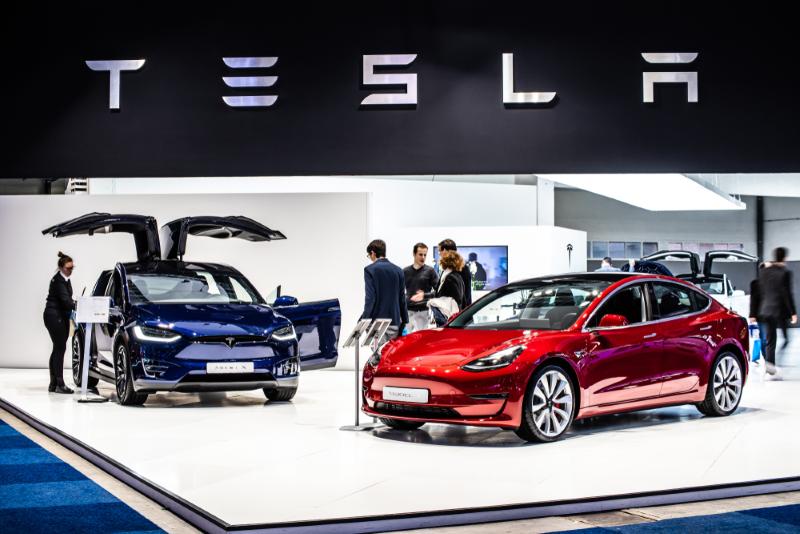
The SEC has allowed Tesla to proceed with an issuer voluntary retail voting programme (IVRVP), but the more consequential decision was its agreement that other companies using the same framework may rely on the relief. The move could accelerate adoption of retail voting programmes across US issuers ahead of the 2027 proxy season.
The SEC’s response suggests a shift beyond reviewing retail voting programmes on a purely case-by-case basis. By effectively endorsing a framework that other companies may use, the Commission has introduced questions about future oversight, retail investor engagement and the impact such programmes could have on shareholder voting outcomes.
Tesla is the third high-profile company to receive confirmation from the SEC’s Division of Corporation Finance that staff will not recommend enforcement action over the introduction of a retail voting programme. ExxonMobil was the first company to pursue such an initiative, while Goldman Sachs received SEC assent for its programme on 28 September.
However, Tesla’s request went further than previous submissions. The company asked that any issuer operating a programme “in the manner described in this framework letter” be permitted to rely on the relief granted in response to Tesla’s request. The SEC agreed to that provision.
As a result, Tesla’s IVRVP may now serve as a template for other issuers without the need for separate SEC approval. That represents a notable departure from the earlier approaches taken in the ExxonMobil and Goldman Sachs cases, where relief was granted in relation to individual programmes.
For investors, the significance lies not only in Tesla’s programme itself but in the possibility of broader adoption. A central concern raised by critics of retail voting programmes is that a convenient opt-in mechanism could evolve into a durable pro-management default. Voting instructions may remain in place as circumstances change, investors may pay limited attention to annual reminders or meeting-specific materials, and votes could continue to align with board recommendations unless shareholders actively intervene.
Until recently, debate around retail voting programmes appeared relatively contained, with Goldman Sachs becoming only the second company to receive SEC approval for such a scheme. The Tesla decision raises the prospect that similar programmes could spread more quickly than previously anticipated, potentially influencing voting dynamics during the 2027 proxy season.
The SEC's agreement to framework-wide reliance could prove as important as the relief itself. Rather than encouraging companies to seek bespoke approvals, the decision suggests regulators may prefer a standardised approach, potentially paving the way for faster adoption among issuers seeking to mobilise retail shareholders ahead of future proxy contests and contentious votes.
At the same time, the programmes approved so far are not identical. As previously highlighted by Minerva Analytics, Goldman Sachs intended to encourage participation among current employees, former partners and alumni who collectively own more than 7.6% of the company’s outstanding shares.
The SEC paid particular attention to this feature, stating that communications to employees must not state, imply or otherwise suggest that programme enrolment is a condition of employment or partnership, or that participation would influence compensation or advancement opportunities.
The Tesla framework may nonetheless encourage issuers to adopt programmes that closely mirror Tesla’s design rather than introducing features that could attract additional scrutiny from regulators.
In its submission to the SEC, Tesla argued that retail investors “face significant and disproportionate challenges in voting their public company shares”, particularly when compared with institutional investors that can access voting platforms designed to streamline client-directed voting.
Tesla also pointed to evidence showing that institutional investors vote their shares at significantly higher rates than retail shareholders. This distinction is especially relevant for Tesla because institutional investors have often been less supportive of management recommendations than retail shareholders. Several large investors have publicly criticised the company and CEO Elon Musk on governance, compensation and other issues in recent years.
Unlike Musk’s SpaceX, Tesla does not operate a dual-class share structure. Musk is estimated to control roughly 15% of Tesla’s shares, meaning voting outcomes remain more vulnerable to shifts in shareholder sentiment. The company has seen several shareholder proposals attract significant support in recent years, while management-backed items, particularly those relating to executive compensation, have also faced substantial opposition.
That leaves Tesla more exposed to defeats on contentious votes than companies with dual-class structures or controlling founders. Retail investor participation therefore carries particular significance for the company’s governance outcomes.
Against this backdrop, Tesla’s introduction of the IVRVP is likely to prompt debate over whether the programme is primarily intended to increase shareholder participation or whether it could also help secure stronger support for management recommendations. Shareholder proposals have achieved majority backing in five of Tesla’s last six AGM cycles, with 2023 the only exception showing that shareholders are active in voting for resolutions and offering a motivation for Tesla management to try to consolidate control.
Tesla has yet to announce a date for its 2026 AGM. At its most recent AGM, held in November 2025, shareholders approved a controversial U$1 trillion pay package for Musk, although almost 23% of votes cast opposed the proposal. Investors were also less supportive of a shareholder proposal requesting that Tesla’s board authorise an investment in xAI, another Musk-controlled company, with only 43% of votes cast in favour.
Whether Tesla’s programme materially increases retail shareholder participation remains uncertain. The more consequential development may be the SEC’s willingness to allow other issuers to rely on the same framework. If companies move quickly to adopt similar programmes, attention is likely to shift from Tesla’s own voting practices to the broader implications of retail voting programmes for shareholder engagement and corporate governance across US markets.







.jpg)