11 December 2025
Jack Grogan-Fenn

11 December 2025
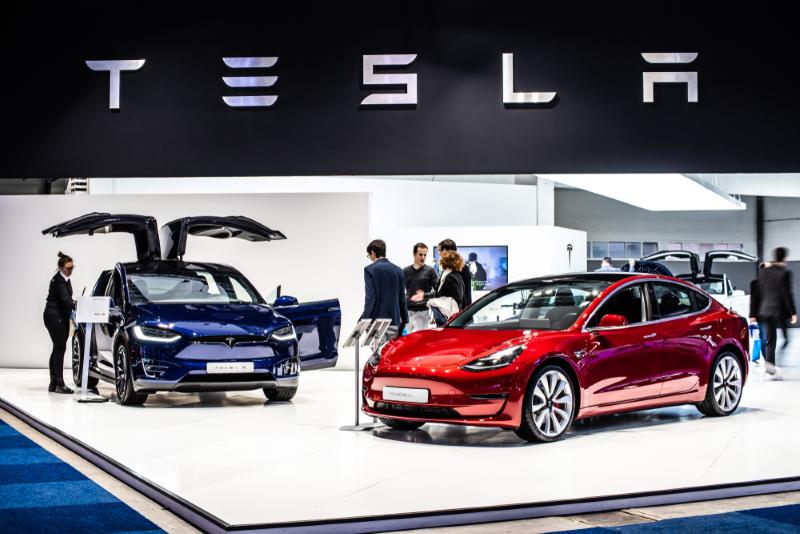
US Senator Bernie Sanders has branded Tesla CEO Elon Musk’s controversial U$1 trillion pay package as “insanity” amid his attempts to tackle increasing executive remuneration and a widening CEO-to-worker pay ratio.
Sanders and Congresswoman Rashida Tlaib, a fellow Democrat, introduced the Tax Excessive CEO Pay Act in September to “end outrageous CEO pay and combat corporate greed”. The legislation would raise taxes on corporations that pay their executives more than 50 times the wages of their workers, with the tax percentage increasing depending on the CEO-to-worker pay ratio. Musk’s pay package, approved by Tesla shareholders in November as reported by Minerva Analytics, was cited as an example of what the impact of the act could be in practice.
Key Client Takeaways:
Sanders Condemns Musk’s Pay Package
Tax Excessive CEO Pay Act Proposal
Growing CEO-to-Worker Pay Gap and Political Momentum
Under the act, companies would be required to pay higher taxes when the ratio of the pay of their CEO to their typical worker exceeds 50:1. This ratio would see firms pay an additional 0.5% tax. This would increase to 1% for a more than 100:1 ratio, 2% for 200:1 or over, 3% for 300:1 or more, 4% if 400:1 is exceeded and 5% if the ratio is greater than 500:1.
As highlighted by Sanders before Musk’s pay package was approved, if he receives the full compensation package which could reach U$1 trillion Tesla could owe up to U$100 billion more in taxes over the next decade under this proposed legislation. This could generate significant capital which could then be invested elsewhere in the economy.
This week writing on X, which is owned by Musk, Sanders reiterated calls for a “billionaire tax”. He additionally stated that the polarising ten-year U$1 trillion pay package is worth more than the combined pay of every elementary school teacher, cashier, restaurant cook, farmworker and bartender in America.
“We can no longer tolerate a rigged economy that enables the richest man in the world, Elon Musk, to become the first trillionaire while 60% of Americans live paycheck to paycheck and millions work longer hours for lower wages,” said Sanders when introducing the act in September. “It is unacceptable that the CEOs of the largest low-wage corporations make more than 630 times what their average workers make. This is not only morally obscene, but also insane economic policy.
He added: “At a time of record-breaking income and wealth inequality, we must demand that the wealthiest people and most profitable corporations in America finally pay their fair share of taxes and treat all employees with the respect and dignity they deserve. That’s precisely what this legislation begins to do.”
Sanders pointed out that the CEOs at the largest 350 U.S. publicly owned firms make 290 times more than the average pay of a typical worker, up from roughly 20 to 30 times in the 1970s. Last year, Walmart’s CEO made U$27.4 million – 930 times more than the median Walmart worker’s pay of U$29,469, JPMorgan Chase CEO Jamie Dimon made U$37.7 million — 348 times more than his average employee – and Coca-Cola’s CEO took home U$28 million, 1,980 times more than the median worker. If the act had been in force last year, JPMorgan Chase would have had to pay U$2.38 billion, Google U$2.16 billion and Walmart U$929 million.
While the act faces an uphill battle, some have forecast a significant political backlash against ‘Big Money’. With the US mid-term elections now less than a year away and the trend lines suggesting a blue wave, as well as criticism of Trump rising, the legislation could see greater momentum going forward.
Last month, Tesla shareholders voted in favour of a performance-based compensation plan for CEO Musk, one of the largest CEO pay packages in corporate history. While the vote passed, major investors like Norges Bank Investment Management and advocacy groups such as Majority Action raised concerns about the package’s scale, dilution risk and lack of alignment with market benchmarks. Even Pope Leo XIV reportedly lambasted corporate pay packages that award executives vastly higher pay than rank-and-file workers, particularly pointing to Tesla's Musk.
The vote does not guarantee a smooth passage for the major pay amount, however. More than 80% of votes were cast in favour of Musk’s U$56 billion pay performance award at a special general meeting in 2018, but it was voided by a Delaware judge last year who deemed it as “unfair” to shareholders, as reported by Minerva Analytics. It was rejected again last December. This pattern could well be repeated for the U$1 trillion dollar pay package, especially due to its significantly higher amount and major implications for Tesla and its shareholders, as well as other companies and investors.
At the end of October the Council of Institutional Investors (CII) sent a letter to the US Securities and Exchange Commission (SEC) urging it to consider changes to increase executive pay transparency, as reported by Minerva Analytics. CII urged the introduction of stricter SEC rules requiring companies to reconcile non-GAAP financial metrics used in executive pay decisions with standard GAAP figures, enhancing transparency and reducing the risk of misleading compensation practices. However, the SEC was reportedly considering both relaxing rules on executive pay following a roundtable on exec compensation disclosure requirements held in June, as reported by Minerva Analytics.
This year, UK executive compensation smashed its record high for a third consecutive year, while CEOs at companies listed on the Swiss stock exchange jumped by more than 7% in 2024 as reported by Minerva Analytics.
You can read more of our articles by clicking here.